Introudction

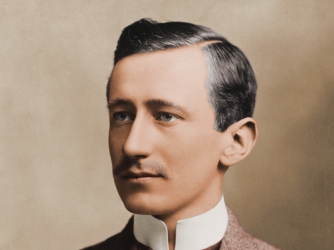
Hi,friends...I am Sandesh Kandel.Really speaking,there are somethings about me,which are sour and bitter.That is natural,for there is no rose without thorn.I always love flowers.My heart leaps to see the flowers planted by myself.As long as I'm in the garden,I forget the realities of life.I'm kind hearted person.I love the poor.My heart smelts to see the misery of others.


<<<NICE TO MEET YOU>>>

Pages

Microwaves | Fact & Information

Microwaves

Microwaves are electromagnetic radiations. They are used for generating heat and are also used for communications.

Longer microwaves like those used in a microwave oven are used to cook food. Shorter microwaves are used in communication and weather forecasts. Microwaves, which are used for radars, are just a few centimetres long.

Short and long microwaves


Each wave has a certain shape and length .The distance between peaks or high points is called wavelength. Microwaves are of two basic types depending on their wavelengths-short and long microwaves. Short microwaves have short wavelengths that can be measured in centimetres, while the long microwaves have wavelengths of about a foot.

Discovery


The existence of microwaves was predicted by a Scottish scientist, James Clerk Maxwell, in 1864. His equations predicted the existence of microwaves. Twenty-four years later, in 1888, Heinrich Hertz demonstrated that

Maxwell was right about the existence of microwaves. Hertz built a device that produced and detected microwaves. In 1894, the Indian scientist,]. C. Bose, publicly demonstrated the wireless
control of a bell using microwaves with
wavelengths in the range of 0.5-2.5 cm. He also conducted research on the Jr. propagation of microwaves.

Guglielmo Marconi
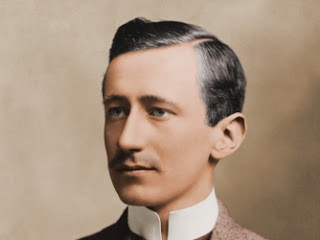

An Italian scientist, Guglielmo Marconi, repeated Hertz’s experiments. He showed that radio and microwave transmissions were possible not just for small distances but across continents.Thirty years after the transmission of the first trans-Atlantic signal, Marconi set up the world’s first
microwave link for the Vatican. Marconi received the Nobel Price for physics in 1909. He is also known as the father of radio.

Importance of microwaves


Microwaves can penetrate clouds, snow, haze, and smoke. They are very useful for transmitting information from one place to another.

Microwave radio

Radio communications using frequencies between approximately 1 GHz and 1,000 GHz is called microwave radio. Many broadcasting and telecommunication transmissions use microwave radio because of the shorter wavelength and larger bandwidth of the microwave spectrum.

Microwave link


A microwave link is a transmission device. It allows video, audio, and data transmissions using radio waves. Transmissions can be sent between two locations that may be a few metres to
several kilometres apart. Television broadcasters use microwave link to transmit television programmes. A microwave link is commonly used in television news and sports events to transmit a signal from a remote location to a television station. The mobile units, called outside broadcast vans (OB vans) use microwave links to transmit live programmes back to the studio for broadcast.

Magnetron


The magnetron is a tube that produces
microwave energy. It was invented by Albert Hull in the 1920s. In the late 1930s and early 1940s, Harry Boot and John Randall developed it further. Magnetron was used by the United States during the World War II to detect ships. Later it was used to manufacture microwave ovens in the late 1940s.

Cosmic microwave background


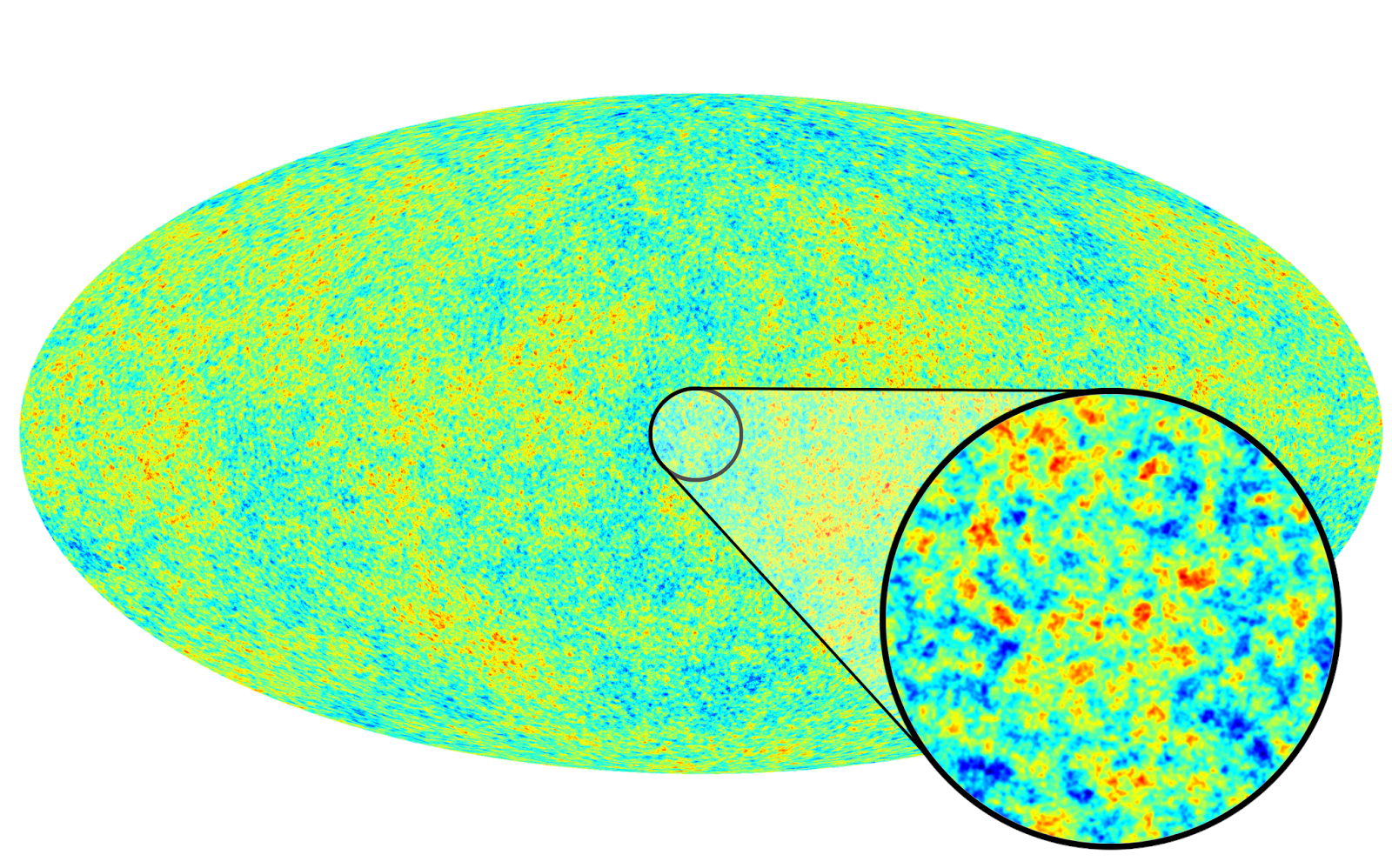
Cosmic microwave background (CMB) is a form of radiation that fills the whole universe. The existence of CMB radiation was first observed by accident in 1965 by Arno Penzias and Robert Wilson at the Bell Telephone Laboratories in Murray Hill, New Jersey, USA.

Microwave oven


The invention of the microwave oven
was one of the important applications
of microwaves. The microwave oven uses microwaves to cook or heat food. Percy Spencer, an American engineer working with the Raytheon Company, invented the first microwave oven while working with the magnetron. Magnetron is a device that produces microwave radiation. In 1946, he discovered that microwaves could be used to cook food fast. The first food to be inadvertently heated by microwaves was a chocolate bar that Dr Spencer had in his pocket while he was experimenting with the magnetron. He then experimented with popcorn kernels and an egg. In 1947, the Hurst commercial oven was sold by the Raytheon Company.

Studying Science | Fact & Infromation

Studying Science


The curiosity of humans to know more about the
natural world has been observed throughout history. Humans have recorded their observations since time immemorial. These observations formed the basis of early scientific records.

Modern science emerged in 16th and 17th century during the Renaissance in Europe. Before the Renaissance, almost all people believed whatever was told to them by the government and whatever was written in the religious scriptures
 without any question. The Renaissance gave birth to the questioning mind of the human being. It saw a more methodical and scientific approach to knowledge. The works of Galileo and Francis Bacon led to the emergence of modern science.

Biology


The word ‘biology’ is derived from the Greek Word bios meaning life and logos meaning the study and description of the life of animals and plants. Hippocrates and Aristotle were the first people to study life in a systematic and scientific manner.

Father of Medicine

Hippocrates is known as the father of medicine. He was a Greek philosopher and physician. He was the first philosopher of his time to make a clear distinction between medicine and philosophy. He practiced medicine purely on the basis of study and observations rather than philosophical assumptions. He travelled through Greece practicing medicine. His work laid the foundations of medicine.

Botany

Botany is the study of plant life. It is also called plant science, phytology, or plant biology. Botany covers a wide range of scientific disciplines.

Anatomy

Anatomy is the branch of biology that deals with the structure and organisation of living things.

Economics

Economics is a social science. It deals with production, distribution, and consumption of available resources. The word ‘economics’ is derived from the Greek word oikos, meaning ‘family, household, estate’, and nomos, meaning ‘Custom or law’. Therefore, economics means ‘household management’ or ‘management of the state‘. Economics has two broad branches:microeconomics and macroeconomics. Microeconomics deals with small units like household items or firms, while macroeconomics analyses the economy of a state or country as a whole.

Zoology

Zoology is a branch of natural science. It is concerned With the study of the animal kingdom. Scientists who study zoology are called zoologists. They conduct research to determine how animals carry out various activities. They also study how different species are related to one another and how species have evolved.

Biochemistry

Biochemistry is the study of the chemistry of plants and animals. Biochemists conduct research on molecules that occur in the cells of animals, plants, and other organisms.

Astronomy

Astronomy is the study of the universe including the Sun, the planets, and other celestial objects. It is studied by people called astronomers. Astronomers observe the universe and celestia bodies using telescopes and other equipment. They use their observations to understand how the universe was formed and has evolved over time.

Metals And Non-Metals | Fact & Information

Metals and Non-metals


Elements can be grouped into two broad categories-metals and non-metals. Metals are elements that are Opaque, lustrous, and good conductors of heat and electricity. lron, gold, and silver are common metals.

Non-metals are elements that cannot conduct electricity or heat very well. Examples of non-metals are oxygen, hydrogen, and carbon. Only 18 elements in the periodic table are generally considered non-metals while there are over 80 metals.

Properties of metals

° Metals have lustre. They are shiny when cut, scratched, or polished.

° They are malleable, that is, they can be hammered into thin sheets without breaking.

° They are good conductors of electricity and heat.

° They are ductile, that is, they can be melted and drawn into thin wires.

° All metals except mercury are solid at room temperature.

° Most metals have high melting points.


Properties of non-metals

° Non-metals have no lustre, that is, they have a dull appearance.

° They are poor conductors of heat and electricity.

° They are brittle, that is, they break easily.

° They are neither ductile nor malleable.

° They have low density and low melting points.


Noble metals

Noble metals are pure metals.They are non reactive and do not combine with other elements to form compounds.They donor corrode easily. Noble metals include copper, palladium, silver, platinum and gold. They are ideal for jewellery and coins.


Alkali metals

Alkali metals are very reactive. They have low melting points. They are soft enough to be cut with a knife. Potassium and sodium are two examples of alkali metals.


Application of metals

There are numerous applications of metals. They are used in building, transportation, aerospace technology, computers, and other electronic devices, satellites, and biomedical applications. They are also used in farming and agriculture in tractors, combines, planters, etc. They are commonly used in household appliances such as vacuum cleaners, pumps, water heaters, ovens, dish washers, washing machines, microwaves, refrigerators, etc. Metals are also used for electric power production and distribution. Boilers, turbines, generators, transformers, power lines, nuclear reactors, oil wells, and pipelines
use metals.


Poor metals

Poor metals become useful only when added to other substances poor metals include aluminium, gallium, tin, thallium, antimony, and bismuth.


Metals of antiquity

Metals were discovered around 5,000 years ago. Cold and copper were one of the earliest metals to be discovered. Seven metals, known as metals of antiquity, were metals upon which ancient civilizations were based. These metals were known to the Mesopotamians, Egyptians, Greeks, and the Romans.The seven metals were: gold (6000 BC), copper (4200 BC), silver (4000 BC), lead (3500 BC), tin (1750
BC), iron (1500 BC), and mercury (750 BC).


Metalloids

Metalloids have properties of both metals and non-metals. Some metalloids such as silicon and germanium are semi-conductors.

Alkaline earth metals

Alkaline earth metals are found in compounds with many different minerals. They are less reactive than alkali metals. They are harder and have higher melting points. Calcium, magnesium, and barium are common examples of alkaline earth metals.


Transition metals

Transition elements commonly refer to any element in the d-block of the periodic table. They include zinc, cadmium, and mercury. All transition elements are metals.Therefore, they are also called transition metals.They are hard, shiny strong, and easy to shape. They are used for many industrial purposes.

Who invented the thermometer?


The first recorded thermometer was produced by the Italian, Santorio Santorio (1561-1636) who was one of a group of Venetian scientists working at the end of the Sixteenth Century. As with many inventions the thermometer came about through the work of many scientists and was improved upon by many others.

1596 Galileo Galilei and the first thermoscope

Galileo Galilei is often claimed to be the inventor of the thermometer. However the instrument he invented could not strictly be called a thermometer: to be a thermometer an instrument must measuretemperature differences; Galileo's instrument did not do this, but merely indicated temperature differences. His instrument should rightly be called a thermoscope.
The Thermoscope
The predecessor to the thermometer, the thermoscope is a thermometer without a scale; it indicates differences in temperature only ie it can show if the temperature is higher, lower or the same, but unlike a thermometer it cannot measure the difference nor can the result be recorded for future reference. The thermoscope was widely used by a group of scientists in Venice that included Galileo. It was only a small step from the thermoscope to the thermometer.

1612 Santorio Santorio - the first thermometer

The Italian, Santorio Santorio (1561-1636) is generally credited with having applied a scale to an air thermoscope at least as early as 1612 and thus is thought to be the inventor of the thermometer as a temperature measuring device. Santorio's instrument was an air thermometer. Its accuracy was poor as the effects of varying air pressure on the thermometer were not understood at that time.

1654 The first sealed liquid-in-glass thermometer

The sealed liquid-in-glass thermometer, more familiar to us today, was first produced in 1654 by the Grand Duke of Tuscany, Ferdinand II (1610-1670). His thermometer had an alcohol filling. Although this was a significant development his thermometer was inaccurate and there was no standardised scale in use.

1714 The first mercury thermometer

Gabriel Fahrenheit (1686-1736) was the first person to make a thermometer using mercury. The more predictable expansion of mercury combined with improved glassworking techniques led to a much more accurate thermometer.

Fahrenheit - the first Standard Thermometer Scale

Fahrenheit used the newly discovered fixed points to devise the first standard temperature scale for his thermometer. Fahrenheit divided the freezing and boiling points of water into 180 degrees. 32 was chosen as the the figure for the lower fixed point as this produced a scale that would not fall below zero even when measuring the lowest possible temperatures that he could produce in his laboratory - a mixture of ice, salt and water. It is sometimes suggested that Fahrenheit divided his scale into 100 degrees using blood temperature (incorrectly measured) and the freezing point of water as fixed points - this is not true. The Fahrenheit scale is still in use today.

1731 The Réamur Scale

In 1731 the Frenchman, René Antoine Ferchauld de Réamur (1683-1757) proposed a thermometer scale on which the freezing point of water was 0° and the boiling point was 80°. The Réamur scale is not in use today.

1742 The Celsius Scale

In 1742 a Swedish scientist named Anders Celsius (1701-1744) devised a thermometer scale dividing the freezing and boiling points of water into 100 degrees. Celsius chose 0 degrees for the boiling point of water, and 100 degrees for the freezing point. A year later, the Frenchman Jean Pierre Cristin (1683-1755) inverted the Celsius scale to produce the Centigrade scale used today (freezing point 0°, boiling point 100°). By international agreement in 1948 Cristin's adapted scale became known as Celsius and is still in use today.

1848 The Absolute Temperature Scale or Kelvin Scale

In 1848 Sir William Thomson, Baron Kelvin of Largs, Lord Kelvin of Scotland (1824 - 1907) proposed the absolute temperature scale with zero degrees being the theoretical lowest temperature possible where molecular motion ceases. Kelvin defined 1 Kelvin degree as being equal to one Celsius. The Degree Kelvin is the current Standard Unit of temperature measurement.

Ma Huri Ma Diyo By Ram Krishna Dhakal:You Can Click And See This Video

Ma Huri Ma Diyo is a new Nepali romantic aadhunik sentimental pop song from Album “Aawaran”. The music video features by Nirajan Thapa , Puja Giri, Raaz Neupane, Babina Poudel, Bhola Shrestha and Anuja Udhas. Ma Huri Ma Diyo is a Nepali song by Ramkrishna Dhakal which is directed by Nikesh Khadka. Ma Huri Ma Diyo music video was edited by Nishan Ghimire and music video was cinematographed by Utsav Dahal.

यी कुराहरु बुझनुस् कुनै मन्दिर,देविदेउता पुज्नु पर्दैन।


मानव जिबनका लागि महत्त्वपूर्ण सुत्रहरु।

१.सम्मान गर्नु-माता,पिता र गुरुलाई।


२.पर्खदैन-समय,मृत्यु,ग्राहक।


३.सानो नसम्झनु-रोग,कर्जा र शत्रुलाई।

"उद्देश्य के लिनु उडि छुनु चन्द्र एक",आफ्नो लक्ष्यलाई कसरी प्राप्त गर्ने त?


आजको व्यस्त जीवनशैलिले गर्दा मानिसहरुलाई भागदौडमा हिड्दैमा ठिक्क परेको छ,कतिपय मानिसहरु कुनै काम नपाएर समय खेर फालिरहेका छ्न् त कतिपय मानिसहरु जिन्दगिको कुनै उद्देश्य नदेखेर त्यत्तिकै भौतारिरहनुपरेको अबस्था छ, राम्रो सँग केही कुरा नयाँ सोच्ने विषयमा समेत हम्मेहम्मे परेको छ जसले गर्दा हामिभित्र निराशापनले छाएको छ।हामिलाई आफ्नै बारेमा पनि राम्ररी सोच्ने फुर्सद भएको छैन।आउनुस् मित्रहरु निराशाबाट बच्नको लागि तलका कुरा दैनिक व्यवहारमा लागू गर्नुसहोस्।