Sydney Opera House | Fact & Informations
Sydney Opera House
The Sydney Opera House is one of the architectural wonders of the world. The opera house is located in Sydney, New South Wales, Australia. It is situated on Bennelong Point, which reaches out into Sydney Harbour‘s Port Jackson. The opera house was designed by Danish architect Jorn Utzon.
The opera house is a complex of halls and theatres, which are linked together. The house presents theatre, musicals, opera, contemporary dance, ballet, and every form of music from symphony concerts to jazz as well as exhibitions and films. it is also used for other functions such as parties,conferences and weddings. The house operates 24 hours a day, every day of the year except Christmas Day and Good Friday.
Conception
The idea of constructing the Sydney Opera House arose after World War II. In 1954, , the government of South Wales decided to build a new opera house. The Bennelong Point was finalised as a site for the opera house. Architects from all over the world were invited to submit their designs for a complex including two main halls, a restaurant and public meeting rooms. The competition was announced and in December 1956, a total of 234 architects from nine different countries submitted their designs. The results were announced in January 1957 and Danish architect John Utzon won the competition.
Construction
The formal conduction of the opera house began in March 1959. The project was divided into three stages. The first stage consisted of building the upper podium that was constructed between 1959-63. The second stage involved building the outer shells, and the third stage involved the interior design and construction. The third stage took four years to complete and was completed between 1967-73.
Funds
The funds for the construction of the Sydney Opera House were largely provided by a lottery system. Before the construction started, many public fund-raising campaigns were organized to collect money. The campaigns failed to produce sufficient funding and an opera lottery house was created in 1958. The lottery continued till the completion of the opera house.
Inauguration
The Sydney Opera House took 17 years to complete. It was inaugurated by Queen Elizabeth II, on 20 October 1973. The opening ceremony of the opera house
was attended by millions of people. The programme was televised and included a performance of Beethoven’s Symphony Number 9 along with a fireworks show.
Problems
Jorn Utzon faced many technical problems during the construction of the opera house. His design required advanced technology, which was not available at that point of time. So, the construction was delayed by several years. During this period, Utzon was pressurised by the government and the press to continue the project and ignore his problems John Utzon, however, released to do so, and he resigned and returned to Denmark in 1965. After his resignation, the construction of the opera house was handed over to a group of Australian architects of opera housewas finally completed in 1973. The total cost incurred amounted to almost 15 times the estimated budget.
Mercury | Fact & Information
Mercury
Mercury is the planet closest to the Sun. It is the smallest planet of the solar system. With a diameter of about 4,828 km,the planet is barely larger than the Earth’s moon.Mercury orbits the Sun faster than any other planet. It moves around the Sun in an elliptical orbit at an average speed of about 1,73,809 km/h. It takes around 88 Earth days to complete one revolution. A day on Mercury is 58.6 Earth days long. Mercury is the second densest planet alter Earth. The planet has a dense core composed of iron. The diameter of mercury’s core is between 3,600, to 3,800 km. Mercury has no known moons.
Surface features
Mercury’s surface is quite similar to the surface of Earth’s moon. It is made up of rocks and metals and is full of impact craters.The planet has broad, flat plains, steep cliffs and ridges, and terrains. These features on the planet have been named after various artists, mythological figures, and astronomers.
Atmosphere
Mercury does not have an atmosphere. It has a in exosphere made up of atoms blasted off the face of the planet by solar winds. The planet experiences extreme temperatures because of the absence of an atmosphere. The temperature on the surface of Mercury reaches a maximum of 430 °C during the day. 'Ihe nights are extremely cold as . w” the planet fails to retain any heat. Night temperatures drop to a minimum of 170 °C on the planet.
Caloris Basin
Caloris Basin is the largest crater on Mercury. It has a diameter of around 1,481.6 km and is surrounded by a ring of mountains. The crater was formed by the impact of a large meteorite. The floor of the crater is filled with lava plains.
Various names
Over the ages, the planet Mercury has been known by various names. The Sumerians called it Ubu-idim-gud-ud while the Babylonians named the planet Nabu or Nebu after the messenger to the gods. The Greeks named it Apollo and Hermes. The planet was named Mercuryby the Romans after their winged messenger to the gods.
Mission MESSENGER
NASA’s Space Environment, GEochemistry, and Ranging (MESSENGER) rs the first spacecraft to orbit the planet Mercury. The spacecraft was launched in 2004. ‘ MESSENGER is supposed to orbit the planet and study its surface, crust and atmosphere. The spacecraft completed its Hyby of Venus and left for Mercury on 5 June 2007.
Solids,Liquids and Gases | Fact & information
Solids,Liquids and Gases
Matter can exist in different states. Solids, liquids, and gases are three common states of matter.
Solids have fixed shape and volume. Rocks and woods are solids. Liquids have indefinite shape, usually determined by the containers they till. Water and milk are examples of liquids. Gases have no shape. Examples of gases are oxygen and nitrogen gas.
Solids
Solid is the densest state of matter. Solids can be made of elements or compounds They can also be made of mixtures, or combinations of diiferent elements and compounds. Most rocks are mixtures of many elements and compounds. The molecules of solids are very tightly bound and packed into
regular shapes. There is a very little free space between the molecules and they cannot move.This gives solids their fixed shape and volume.
Liquids
Liquids are less dense than solids. The molecules of a liquid are not held together as strongly as in a solid. They can move around each other. This enables the liquids to flow. Liquids take the shape of the container they are held in unlike solids which keep their own shape. The molecules of a liquid often have a greater attraction for other substances than they have for each other. Therefore, they rise in narrow tubes above their own level. This action is called capillarity or capillary action. Plants draw water from the roots by capillary action.
Centre of gravity
The centre of gravity is an imaginary
point in an object where the total
weight of the body may be thought
to be concentrated. In other words, it
is the point within an object at which
gravity can be considered to act. It is
also called centre of mass. The mass of
a ring is thought to be concentrated at the centre of the ring (that is, in the air). The concept of centre of gravity is used in many applications. Engineers try hard to make sport cars as light as possible and then add weight to the bottom. In this way, the centre of mass of the car is nearer to the ground and thus, the car is
more stable.
Gravity on other celestial bodies
Gravity on the Sun is 28 times more than the gravity on the Earth. The gravity on the Moon is about one-sixth of the gravity on Earth. Due to the differences in gravity, the weight of an object will be different on different celestial bodies. For example, the weight of a person on the Moon is about one-sixth of that person’s weight on Earth.
Gravitational wave
Gravitational wave is a wave that is believed to travel at the speed of light and creates gravity. Some examples of systems that emit gravitational waves are binary star systems, where the two stars in the binary are white dwarfs, neutron stars or black holes.
Global Warming | Fact & Information
Global warming is the gradual warming of the Earth’s atmosphere. it has resulted In an Increase in the sea level. It has also led to changes in climatic conditions all over the world. Warming and cooling of the Earth’s atmosphere has been a natural phenomenon. It has occurred over the ages but the warming of the atmosphere in the last few decades had been faster than before. The atmospheric temperatures have gone up by
three times the average for the 20th century since 1970.
Global warming has been attributed to the increased emission at greenhouse gases. The increase in the amount of greenhouse gases has made Earth warmer than usual. It is also causing great problems tor the survival of planet Earth.
Greenhouse gases
Gases that contribute to global warming are known as greenhouse gases. Water vapour is the most abundant greenhouse gas, followed by carbon dioxide (CO), methane (CH 4), nitrous oxide (N20), halogenated fluorocarbons (HCFCs), ozone (O3), perfluorinated carbons (PFCs), and hydro fluorocarbons (HFCs). Greenhouse gases have increased due to various human activities such as combustion of coal, oil, and gas. Every year, humans add over 30 billion tonnes of carbon dioxide in the atmosphere. Methane traps 20 times more heat than carbon dioxide and each year 350-500 million tonnes of methane are added to the air. The amount of nitrous oxide is also increasing by 7-13 million tonnes every year. Greenhouse gases absorb the infrared radiation in the Earth’s atmosphere. The greenhouse gases act as a natural blanket to the Earth.
Greenhouse effect
The greenhouse effect is one of Earth’s natural processes. It is essential for life on Earth. It helps to regulate the temperature of our planet. Certain gases in the Earth’s atmosphere trap the Sun’s energy. Without these gases all the heat from the Sun would escape back into space.'Ihis would make the Earth an extremely cold and uninhabitable place. This natural process that keeps the Earth warm is known as greenhouse effect.
Indicators of warming
There have been several indicators of global warming such as borehole temperature, melting snow cover, and receding glaciers. Since glaciers are at higher altitudes, the recession of glaciers provide more insight into temperature changes at higher atmosphere.The global sea level has increased at an average rate of 1-2 mm/year over the past 100 years.
Causes
Global Warming is caused by natural as well
as man-made causes. Natural causes such as release of greenhouse gases by wetlands and cyclic climatic changes lead to an increase in the amount of greenhouse gases. Man-made
causes have played a major role in global warming. Burning of fossil fuels, mining coal, increase in population, and deforestation are a few of the many causes of global warming.
as man-made causes. Natural causes such as release of greenhouse gases by wetlands and cyclic climatic changes lead to an increase in the amount of greenhouse gases. Man-made
causes have played a major role in global warming. Burning of fossil fuels, mining coal, increase in population, and deforestation are a few of the many causes of global warming.
Predictions about climate
Global surface temperatures have increased by
about 0.6 °C since the late 19th century, and by about 0.2-0.3 °C over the past 25 years. Current forecasts and studies have predicted that global temperatures will rise between 3.5 and 8 °F and sea levels are likely to rise between 17.5 cm and 57 .5 cm by 2100 if the emission of greenhouse gases is not controlled.
Effects of global warming
The change in climate affects people, plants, and animals. Scientists have already observed many changes because of global warming such as sea level rise, shrinking glaciers, melting of permafrost, and trees blooming before time. Human health is also affected by climate change. Long periods of heat and cold and storms have increased climate-Sensitive diseases such as malaria, dengu fever, yellow fever, and encephalitis. EXtreme temperatures can often lead to loss of life, ecological disturbances, and increase in the number of parasites. The increase in temperature has also increased the air and water pollution.
Computer Generation | Fact & Information
Computer
The computer is one of the most amazing inventions of man of this let century. In, this world, computer plays the vital role. It has covered almost all parts of human life. The credit of the invention of computer goes to Charges Babbage. So, he 18 called as the father of computer.Computér is an electronic device which receives input data, process them and gives meaningful output as r a result. It even stores a lot of mformation which can be u processed and analyzed through computer for many purposes.
On the basis of size, computers are categorized into four classes,they are super computer, mainframe computer, mini computer, microcomputer.
Computer is used widely because of its speed, accuracy and precision. It is used in industries for calculating income, expenditure and value of products Complicated calculations can be carried out accurately in a few seconds. It can process information very fast and more accurately.So it is widely used in schools, banks, railways,hospitals, post office, etc. It is used in educational institutions for result and calculations. Banks keep their accounts and secrets in computers ReservatiOns for travelling are made by computer . Doctors use computer in complicated surgery. Engineers use it to design and analyze the complex structure The use of Internet has been possible because of computer, network It has narrowed down the entire world It has been able to give a lot of information about different aspects from nook and corner of the World Therefore, computer is used in every aspects of human life.
The use of computer has some drawbacks. It has displaced many people from their job as it does the work of many people It has creted the problem of unemployment It also creates health problems to computer users. Computer users can have the problem of eyesight and body paining.It is essential to be very much careful of the problems created by computers.
Microwaves | Fact & Information
Microwaves
Microwaves are electromagnetic radiations. They are used for generating heat and are also used for communications.Longer microwaves like those used in a microwave oven are used to cook food. Shorter microwaves are used in communication and weather forecasts. Microwaves, which are used for radars, are just a few centimetres long.
Short and long microwaves
Each wave has a certain shape and length .The distance between peaks or high points is called wavelength. Microwaves are of two basic types depending on their wavelengths-short and long microwaves. Short microwaves have short wavelengths that can be measured in centimetres, while the long microwaves have wavelengths of about a foot.
Discovery
The existence of microwaves was predicted by a Scottish scientist, James Clerk Maxwell, in 1864. His equations predicted the existence of microwaves. Twenty-four years later, in 1888, Heinrich Hertz demonstrated that
Maxwell was right about the existence of microwaves. Hertz built a device that produced and detected microwaves. In 1894, the Indian scientist,]. C. Bose, publicly demonstrated the wireless
control of a bell using microwaves with
wavelengths in the range of 0.5-2.5 cm. He also conducted research on the Jr. propagation of microwaves.
Guglielmo Marconi
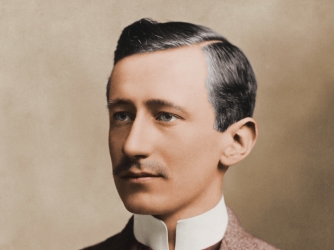
An Italian scientist, Guglielmo Marconi, repeated Hertz’s experiments. He showed that radio and microwave transmissions were possible not just for small distances but across continents.Thirty years after the transmission of the first trans-Atlantic signal, Marconi set up the world’s first
microwave link for the Vatican. Marconi received the Nobel Price for physics in 1909. He is also known as the father of radio.
Importance of microwaves
Microwaves can penetrate clouds, snow, haze, and smoke. They are very useful for transmitting information from one place to another.
Microwave radio
Radio communications using frequencies between approximately 1 GHz and 1,000 GHz is called microwave radio. Many broadcasting and telecommunication transmissions use microwave radio because of the shorter wavelength and larger bandwidth of the microwave spectrum.
Microwave link
A microwave link is a transmission device. It allows video, audio, and data transmissions using radio waves. Transmissions can be sent between two locations that may be a few metres to
several kilometres apart. Television broadcasters use microwave link to transmit television programmes. A microwave link is commonly used in television news and sports events to transmit a signal from a remote location to a television station. The mobile units, called outside broadcast vans (OB vans) use microwave links to transmit live programmes back to the studio for broadcast.
Magnetron
The magnetron is a tube that produces
microwave energy. It was invented by Albert Hull in the 1920s. In the late 1930s and early 1940s, Harry Boot and John Randall developed it further. Magnetron was used by the United States during the World War II to detect ships. Later it was used to manufacture microwave ovens in the late 1940s.
Cosmic microwave background
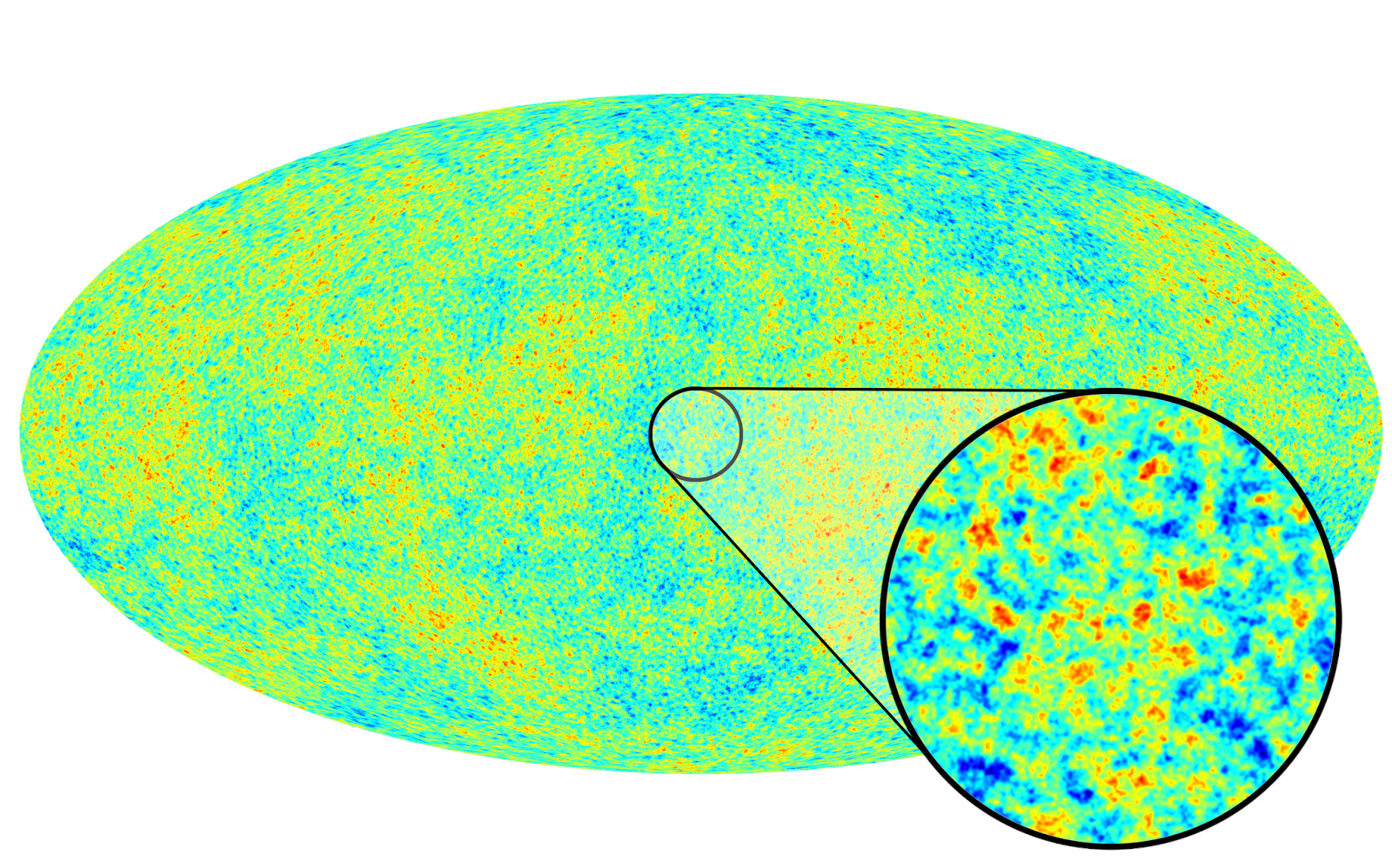
Cosmic microwave background (CMB) is a form of radiation that fills the whole universe. The existence of CMB radiation was first observed by accident in 1965 by Arno Penzias and Robert Wilson at the Bell Telephone Laboratories in Murray Hill, New Jersey, USA.
Microwave oven
The invention of the microwave oven
was one of the important applications
of microwaves. The microwave oven uses microwaves to cook or heat food. Percy Spencer, an American engineer working with the Raytheon Company, invented the first microwave oven while working with the magnetron. Magnetron is a device that produces microwave radiation. In 1946, he discovered that microwaves could be used to cook food fast. The first food to be inadvertently heated by microwaves was a chocolate bar that Dr Spencer had in his pocket while he was experimenting with the magnetron. He then experimented with popcorn kernels and an egg. In 1947, the Hurst commercial oven was sold by the Raytheon Company.
Subscribe to:
Posts (Atom)